

The hydration state of the proton exchange membrane plays a very important role in determining the performance and life of the fuel cell: when there are too few water molecules in the membrane, the membrane cannot conduct protons, and the fuel cell efficiency decreases, or even cannot work normally; and if there are too many water molecules in the membrane At this time, it will cause water blocking of the entire fuel cell system, and the fuel cell will not work normally.
Therefore, it is necessary to humidify the reaction gas entering the battery pack to ensure that the proton exchange membrane is in a proper water saturation state and maintain a high electrical conductivity, so that the fuel cell can work efficiently. This also means that humidification of the fuel cell intake is very necessary, and the importance of the humidifier as a key component is self-evident.
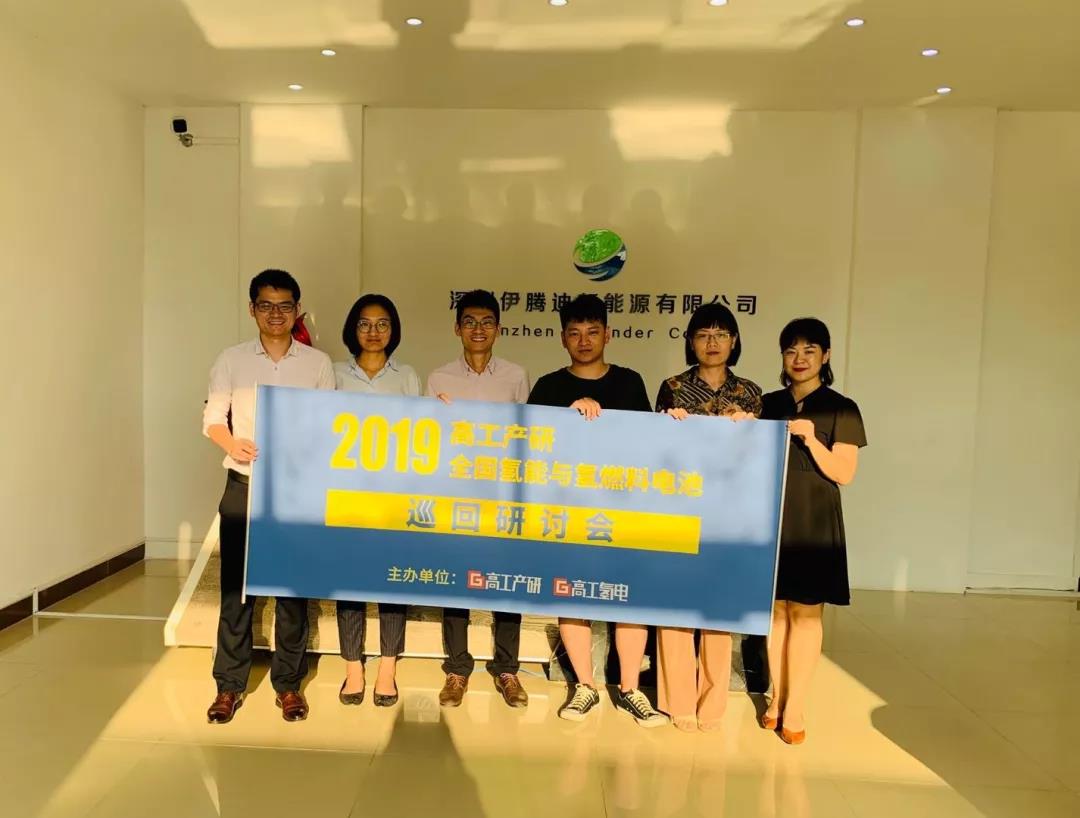
It should be noted that due to the high technical threshold and small market capacity, there are only a handful of companies in the world that can provide fuel cell humidifiers, only South Korea KOLON and the United States Perma Pure. In China, there is currently only one company that can commercialize humidifier products, and it is Shenzhen Extender Co., Ltd. (hereinafter referred to as "Extender"). On September 9, the touring research team of Gaogong Hydrogen and Electricity visited Extender to gain insights into the company's product technology and market planning.
Extender was established in 2014. In 2017, it initially completed the development of a prototype of a 5-10kW gas humidifier; in 2018, the second-generation product of a 30kW gas humidifier was finalized. According to the needs of the manufacturer, a gas humidifier above 80kW was started. In 2019, the development of the prototype of the 80kW gas humidifier was completed, and the professional test platform for humidifiers within 120kW was completed.
At present, Extender has become the first domestic enterprise to realize the commercialization of fuel cell system gas humidifier products with independent intellectual property rights, filling the domestic technological gap.
The reason why Extender can become the first company in the field of fuel cell humidifiers in China is inseparable from the support of an excellent technical team. The company hired an expert in the fuel cell field of South China University of Technology—Professor Liao Shijun as the company’s technical support and to guide related core technology research and development; it introduced Dr. Liu Jingjing, an overseas talent who graduated from the University of Nottingham, UK, as the product director; and dozens of R&D engineers were formed. A strong R&D team has been established.
According to Zheng Jiaquan, the person in charge of Yitengdi, the company's fuel cell gas humidifier research and development project was one of the sub-projects in 2017, and successfully applied for the key research and development program of the Ministry of Science and Technology-"Development and development of high-performance and long-life fuel cell engine systems. ". The project is undertaken in cooperation with dozens of influential domestic research institutions and enterprises.
"After preliminary customer testing and actual operation, the company has continuously tested processes and product materials, and has gradually formed a number of models and multiple companies for bulk order sales and cooperation." Zheng Jiaquan revealed that there are currently no relevant standards for humidifiers in China. , After sorting out and collecting customer requirements, the company starts R&D and production with the most stringent requirements, so the product quality is recognized by customers. Since the company launched its market promotion last year, it has achieved good results. In order to meet customer needs, it is expected that production capacity will continue to expand in the second half of the year.
It is worth mentioning that the membrane tube materials of the core components of humidifiers currently on the market are relatively expensive, while Extender uses self-developed hollow fiber membrane tubes, which can greatly reduce product costs, so it has a very advantageous price. . In addition, compared with foreign products, Extender's technology can achieve deep matching and tailor-made humidifiers for major car companies and system companies, which also gives Itendi an advantage in market promotion.During the exchange, the two parties also conducted in-depth discussions on the technical scheme of the humidifier.
The hollow fiber humidifier used by Extender is a homogeneous and non-porous hollow fiber bundle made of hydrophilic materials. Water (or exhaust) flows through the hollow fiber bundle, and humidified gas flows through the hollow fiber bundle. Because of the difference in concentration, water diffuses from the outside to the inside of the hollow fiber, and evaporates into the reaction gas to complete the humidification of the gas. By adjusting the gas flow rate, hollow fiber material, hollow fiber filament surface area, water temperature (or exhaust temperature), water (or exhaust gas) flow, and gas-liquid pressure difference, the amount of humidification of the hollow fiber can be changed.
Gaogong Hydrogen Electric understands that no matter what kind of reactive gas humidification technology is used, it will complicate the battery system or increase the mass and volume of the battery pack, so the industry has also proposed a self-humidification program. However, self-humidification is only realized on some fuel cells with relatively low power (a few hundred watts) in the industry at present. There are two difficulties in realizing self-humidification with high-power fuel cells: the water produced by the reaction is not enough to humidify the intake air, The dynamic response is slow; the mass and volume of the battery pack are increased, and the structure of the battery pack is complicated.
Therefore, it is not realistic at this stage to truly realize the "self-humidification" of vehicle fuel cells. This also gives Yitendi, which has its own humidifier technology and takes the lead, a broad market space.
